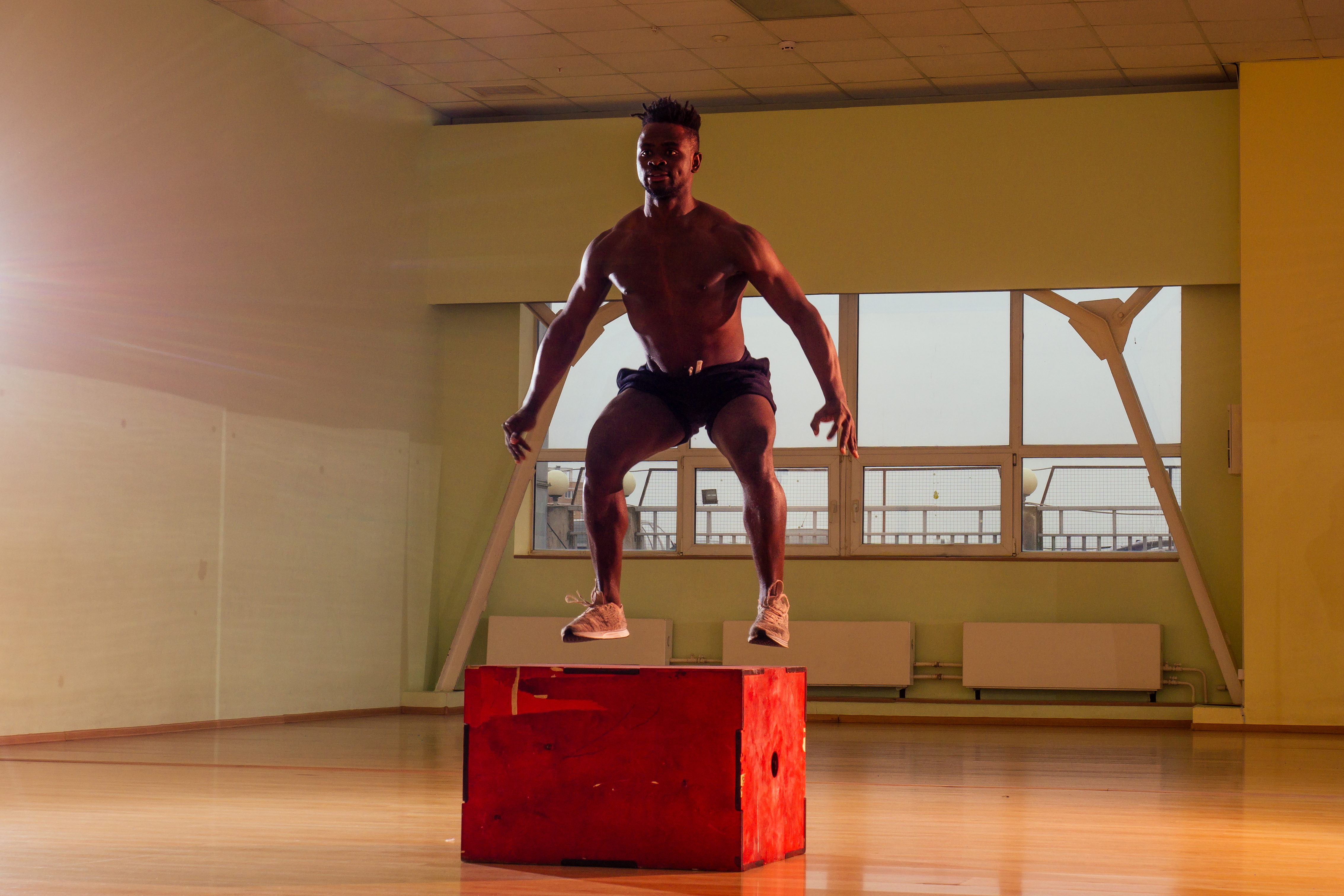

10 Steps to a Higher Vertical Leap: A Comprehensive Training Program
Increasing your vertical jump requires a combination of plyometric workouts, strength training exercises, and athletic movements. Here’s a comprehensive 10-step program designed to help you achieve explosive power and reach new heights.

Ten Keys to Achieving a High Vertical Leap
Explosive Power:
- Develop explosive power through plyometric exercises like box jumps, depth jumps, and squat jumps. These exercises train your muscles to generate maximum force in a short amount of time, crucial for a high vertical leap.
Leg Strength:
- Building overall leg strength with exercises such as squats, deadlifts, and lunges is essential. Strong quadriceps, hamstrings, and glutes provide the power needed for a high jump.
Core Stability:
- A strong core stabilizes your body during the jump and helps transfer energy efficiently. Incorporate planks, Russian twists, and leg raises into your routine.
Proper Technique:
- Mastering the correct jumping technique involves a coordinated effort between your arms and legs. Focus on your arm swing, knee bend, and timing to ensure maximum lift.
Flexibility:
- Flexibility in your hip flexors, hamstrings, and calves can enhance your jumping ability. Regular stretching and dynamic warm-ups improve your range of motion and reduce injury risk.
Speed Training:
- Speed training with sprints and agility drills improves your ability to generate force quickly, which is vital for a powerful takeoff.
Balance and Coordination:
- Exercises that challenge your balance, like single-leg squats and stability ball drills, enhance your coordination and stability during the jump.
Consistent Practice:
- Regular practice of your jump technique, including takeoffs from various distances and speeds, helps refine your form and build muscle memory.
Nutrition and Hydration:
- Proper nutrition and hydration support muscle function and recovery. Ensure you have a balanced diet rich in proteins, carbohydrates, and healthy fats, along with adequate water intake.
Recovery:
- Adequate rest and recovery are essential to allow your muscles to repair and grow. Incorporate rest days, proper sleep, and recovery techniques like foam rolling and massage into your routine
One-Week Workout Schedule
Day 1: Strength and Plyometrics
Warm-Up (10 minutes):
- Dynamic warm-up: Jogging, high knees, butt kicks, arm circles.
Strength Training:
- Bulgarian Split Squats: 4 sets of 10 reps per leg.
- Hex Bar Deadlifts: 5 sets of 8 reps.
- Box Step-Ups: 5 sets of 12 reps per leg.
- Walking RDLs with Dumbbells: 3 sets of 12 reps per leg.
Plyometric Training:
- Depth Jumps: 5 sets of 10 reps.
- Box Jumps: 5 sets of 10 reps.
- Single-Leg Hops: 5 sets of 10 reps per leg.
Core and Flexibility:
- Planks: 3 sets of 1-minute holds.
- Russian Twists: 5 sets of 20 reps.
- Dynamic stretches focusing on lower body (10 minutes).
Day 2: Explosive Movements
Warm-Up (10 minutes):
- Dynamic warm-up: Skipping, leg swings, arm circles.
Explosive Strength Training:
- Hex Bar Deadlifts with Explosive Up: 5 sets of 6 reps.
- Quarter Squats: 5 sets of 10 reps.
- Step-Ups to Explode with Medicine Ball: 5 sets of 10 reps per leg.
Plyometric Training:
- Exploding Lunges to High Knees: 5 sets of 10 reps per leg.
- Backwards Lunges: 5 sets of 10 reps per leg.
- Lateral Bounds: 5 sets of 12 reps per side.
Agility Training:
- Stair Sprints: 5 sets of running up and walking down.
Core and Flexibility:
- Russian Twists: 5 sets of 20 reps.
- Leg Raises: 5 sets of 15 reps.
- Dynamic stretches focusing on lower body (10 minutes).
Day 3: Strength and Plyometrics
Warm-Up (10 minutes):
- Dynamic warm-up: Jogging, butt kicks, high knees, arm swings.
Strength Training:
- Deadlifts: 5 sets of 8 reps.
- Walking RDLs with Dumbbells: 5 sets of 12 reps per leg.
- Leg Sled One Leg Press: 4 sets of 10 reps per leg.
- Light Weight High Rep Squats: 5 sets of 15 reps.
Plyometric Training:
- Lateral Bounds: 5 sets of 12 reps per side.
- Single-Leg Hops: 5 sets of 10 reps per leg.
- Wall Ball with Medicine Ball (jumping high): 5 sets of 20 reps.
- Jump Rope (or continuous jump): 5 sets of 1-minute intervals.
Core and Flexibility:
- Planks: 3 sets of 1-minute holds.
- Side Planks: 5 sets of 30-second holds per side.
- Static stretches focusing on lower body (10 minutes).
Detailed Exercise Descriptions
Bulgarian Split Squats
- Stand a lunge length in front of a bench.
- Place one foot on the bench behind you.
- Lower your hips until your front thigh is nearly horizontal.
- Push back up to the starting position.
Hex Bar Deadlifts
- Stand with feet hip-width apart, barbell in front.
- Hinge at your hips and knees to grasp the bar.
- Lift the bar by straightening your hips and knees, then lower it back down.
Box Step-Ups
- Stand in front of a sturdy box or platform.
- Step onto the box with one foot, driving through your heel to lift your body.
- Step down and repeat with the other leg.
Depth Jumps
- Step off a box, land softly, and immediately jump as high as possible.
Box Jumps
- Jump from the ground onto a box, focusing on explosive power and soft landings.
Step-Ups to Explode with Medicine Ball
- Hold a medicine ball at chest level.
- Step onto a box and explode upwards, driving the knee of the non-stepping leg.
Exploding Lunges to High Knees
- Perform a lunge and then explosively drive your knee up to a high knee position.
Walking RDLs with Dumbbells
- Hold dumbbells in each hand.
- Perform a Romanian deadlift while walking forward, alternating legs.
Leg Sled One Leg Press
- Use a leg press machine, pressing with one leg at a time to build unilateral strength.
Wall Ball with Medicine Ball
- Perform a squat and throw a medicine ball against the wall as you jump up, catching it as you descend.
Recovery and Stretching
- Cool down with light jogging or walking for 5 minutes.
- Perform static stretches focusing on hamstrings, quads, calves, and hip flexors.
By following this one-week workout schedule and incorporating these essential exercises, you’ll develop the explosive power, balance, and strength needed to significantly improve your vertical jump. Remember to maintain proper form, progress gradually, and allow for adequate recovery to achieve the best results.
Finding your perfect jump form involves understanding the mechanics of your takeoff and training specifically to optimize this movement. Dedicate time to practicing jumps from various distances and speeds, focusing on the consistency of your form and the efficiency of your takeoff. Incorporate drills that emphasize proper knee bend, arm swing, and explosive power, ensuring each component is fine-tuned for maximum height and control. By repeatedly refining these elements, you develop a more effective and powerful jump, tailored to your body’s natural movement patterns.